Cocobi Body Parts - kids
- 0.0
- Rating
- 10.00K
- Installs
- Free
- Price

 Analysis by App-foxy
Learning about the human body can feel abstract to a young child, but Cocobi Body Parts turns that subject into a playful activity built around friendly dinosaur characters. I found the game most appealing as a short, guided learning experience rather than something children would play for long stretches. Its focus is simple: help kids explore body parts through colorful interactions and approachable challenges.
That simplicity is important. The game is made for children, sits in the educational category, and is rated Everyone, so its basic tone is intended to be suitable for a broad family audience. KIGLE, the developer, has also kept the idea easy to understand: children can learn through recognizable characters instead of facing a dense lesson or a page full of text.
The game is free to start, with optional in-app purchases priced at $1.39 per item. It has reached over ten thousand installs, and the current version is 1.0.0. It was released on August 3, 2026, and runs on Android 7.0 or later. Those details make it accessible to families using older compatible devices, although the experience will still depend on the phone or tablet’s screen quality and responsiveness.
You May Also Like

 Pandora - Music & Podcasts
Pandora’s Music Is Easy to Start, but Harder to Recover
Pandora’s strength is its low-effort path from a seed to a station. Its weak spot is how much confidence it asks you to place in connection, setup, and quiet recovery.

 8 Ball Pool
 Is Built on Rivalries, Rematches, and Routine
A close look at the rivalries, rematches, shared routines, and unanswered safety questions that turn a quick pool match into a persistent mobile community.

 Samsung Music
’s Quiet Strength Is Playing What You Already Own
Its reach comes less from spectacle than from dependable access to a personal library. That simplicity is both the app’s strongest retention engine and its ceiling.

 AccuWeather: Weather Radar
AccuWeather Review: A Quick, Clear Forecast for Everyday Decisions
For everyday plans, the best forecast is the one you can understand quickly. AccuWeather makes rain timing, radar, and local conditions easy to act on, with a few trade-offs.

 Hill Climb Racing
Why Hill Climb Racing Still Turns Crashes Into One More Run
A tiny car, a bumpy hill and one more upgrade: Hill Climb Racing keeps resurfacing because its simple chaos makes every near-miss feel personal.

 AliExpress - Shopping App
AliExpress Makes Global Shopping Feel Personal, but Shoppers Bear the Risk
AliExpress turns a global marketplace into a pocket-sized discovery engine. Its reach is useful, its shopping loop compelling, and its trade-offs easy to miss.
More From Our News Desk
View All News


How clearly children can read and navigate the experience
I’d use this section to think about how a child understands the screen, not just whether they can tap it. A useful check is to ask them to explain what they are looking for before you offer help; that can show whether the pictures are guiding them or whether they are guessing. I also pay attention to whether a child can return to the activity after a brief pause, since that’s a practical sign the navigation feels clear.
Visual communication does most of the teaching
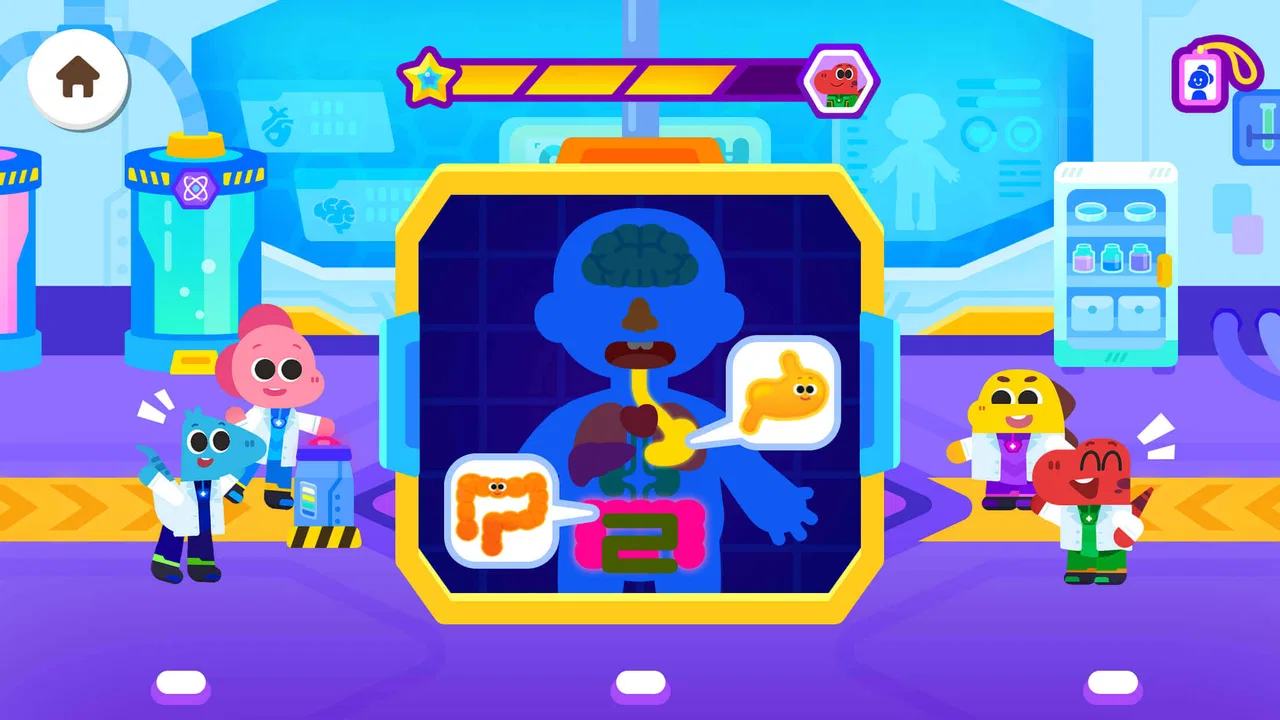
My first impression is that the game’s strongest communication tool is visual rather than verbal. Cute dinosaurs immediately give the subject a friendly identity, which matters when a child may not yet be comfortable reading instructions independently. Body parts are easier to discuss when they are connected to a character children enjoy looking at.
For early learners, this approach is more practical than presenting a long explanation. A child can look at the character, notice the highlighted area, and connect the image with the spoken or written name supplied by the game. That creates a useful bridge between recognition and vocabulary, especially when an adult is nearby to repeat the word and ask the child to point to the same part on themselves.
I would still treat the game as a shared learning tool for children who are not reading yet. Friendly pictures can explain the goal, but they do not automatically replace adult guidance. A preschooler may understand where to tap without understanding the word being introduced. Sitting beside the child for the first few sessions makes the activity more educational and helps reveal whether the child is following the lesson or simply touching the most colorful object on screen.
Navigation should be introduced slowly
Simple children’s games can be easy for an adult to understand while still confusing for a young player. In my experience, the best way to begin is to let the child watch one complete activity before taking over the device. This gives them a chance to see the rhythm of selecting, responding, and moving forward without turning the first session into a test of reading ability.
The dinosaur theme also provides a helpful visual anchor. If a child forgets what to do, returning attention to the character can be more effective than repeating a complicated instruction. I would use short prompts such as “find the hand” or “show me the same part” rather than explaining every button. This keeps the focus on body vocabulary instead of device operation.
There is a trade-off here. A highly visual interface is welcoming for children who are still learning letters, but it may offer less support for a child who needs very explicit, step-by-step navigation. Parents should watch for signs of confusion, such as repeated tapping without looking at the character or leaving an activity before responding. Those signs do not necessarily mean the child cannot use the game; they may simply mean the session needs an adult guide or a quieter setting.
Reading practice is useful, but limited
I would not choose this game as a main reading app. Its value is more focused: it can help children connect body-part words with pictures and actions. That makes it a nice supplement after a child has learned a word elsewhere, or a gentle introduction before formal vocabulary practice.
A useful routine is to pause after each activity and ask the child to say the word, point to it on the dinosaur, and then identify it on their own body. This three-step routine turns screen recognition into a real-world memory exercise. It also helps parents notice whether the child understands the concept or is only repeating a sound.
Motor, sensory, and everyday access
Here I’d focus on whether the child can take part comfortably with their own hands, eyes, and attention. Try the game in the setting where it will actually be used, and notice whether screen size, glare, or a busy room changes how easily they can follow the character. Small adjustments—like placing the device on a table or offering a slower demonstration—can make the activity feel more accessible without taking away the child’s chance to try.
Touch interaction can support different motor abilities
Body-part games naturally invite tapping and pointing, which are familiar actions for many children. That can make the experience less demanding than a game requiring rapid movement, precise timing, or several simultaneous controls. A child with developing fine-motor skills may be able to participate by taking extra time and using one deliberate touch at a time.
However, I would not assume that every child will find the controls effortless. Small targets, accidental touches, or a screen that does not respond consistently can turn a learning activity into a frustrating exercise. A tablet may be easier than a small phone because the child has more room to see the dinosaur and place a finger accurately. A stable surface can also help children who find it difficult to hold a device and tap at the same time.
One practical tip is to use a short demonstration before asking the child to complete an activity alone. If the child repeatedly misses the intended area, an adult can model a slow tap and then let the child try. This reduces pressure and makes the motor action part of the learning process rather than a hidden obstacle.
Visual and sensory comfort matters
The colorful dinosaur presentation is likely to attract attention, but attention and comfort are not the same thing. Some children enjoy bright animation, while others become overwhelmed when a screen contains too much movement or visual activity. I would introduce the game in a calm room and observe whether the child remains engaged, looks away often, or becomes unsettled.
Short sessions are a sensible choice even when a child is enjoying the game. Stopping after a small number of activities gives the child time to remember the vocabulary without turning the screen into background noise. It also makes the game easier to fit into a bedtime, classroom, or waiting-room routine.
Sound can be helpful when a child is not reading yet, but children process audio differently. If the child seems to rely on visual cues, I would repeat the body-part names aloud and point to the matching area. If sound distracts them, the adult can make the lesson more visual by speaking slowly and keeping the device at a comfortable distance.
Different learning speeds need different expectations
The game works best when progress is not treated as a race. One child may recognize a body part immediately, while another may need repeated examples and physical pointing. I would avoid correcting every mistake instantly. Instead, I would give the child a moment to look again, then offer a clue such as “it helps you wave” or “you use it to see.”
This is one of the more useful ways to adapt the experience without changing the app itself. The screen supplies the playful context, while the adult adjusts the language, pace, and amount of help. Children who are confident can answer independently; children who need more support can use the dinosaur as a visual reference.
Situational access at home and elsewhere
Because this is a compact educational game, I see it fitting naturally into small pockets of time. A parent could use it after a bath while naming the child’s hands, feet, and face, or during a quiet afternoon when a child wants a screen activity with a clear learning purpose. It could also work as a transition activity before a lesson about health, movement, or personal care.
A realistic example would be a child getting ready for preschool. Instead of handing over the device with no context, a parent could choose one short session, ask the child to identify the same body parts while dressing, and then put the device away. The game becomes a prompt for conversation rather than a replacement for conversation. That is where I think it has more educational value than passive video.
It may also be useful in a small group, but only with structure. If several children share one device, waiting turns can become more distracting than the lesson. An adult could let one child tap while the others point to the matching body part on themselves. Without that guidance, the fastest or most confident child may dominate the activity.
For travel, the game’s free entry point makes it easy to try without committing to a paid educational package. Still, parents should test it before relying on it during a journey. A child may enjoy the dinosaur theme for a few minutes but need a different activity once the novelty fades. It is better viewed as one item in a small travel toolkit than as a complete solution for keeping a child occupied.
Where it compares well with usual alternatives
Compared with ordinary flashcards, this game adds movement and interaction. A child can respond to a character instead of only looking at a printed picture, which may help children who lose interest during static vocabulary practice. Compared with a general video about the body, it offers a more active role: the child has to notice and respond rather than simply watch.
Flashcards still have advantages. They are easier to share, do not depend on a charged device, and allow an adult to change the order or wording instantly. A physical book may also provide richer context, showing how body parts work together rather than isolating individual terms. For that reason, I would pair this game with real objects, drawing, singing, or movement instead of expecting it to cover the whole topic.
Compared with a broad educational platform, this title is narrower and easier to introduce. A child does not have to choose from many unrelated subjects before reaching the body lesson. The downside is that families seeking a large curriculum or long-term progression may find the focused scope too limited. Its strength is a clear starting point, not an all-purpose learning library.
Remaining barriers parents should watch for
The biggest barrier is the gap between playful recognition and independent understanding. A child may tap correctly because the picture is obvious without remembering the word later. Parents can address this by asking the child to use the word away from the screen. If the child can identify the part during dressing, washing, drawing, or movement, the lesson is transferring into everyday knowledge.
Another barrier is adult availability. The game may be easy enough for some children to explore alone, but younger learners often gain much more when an adult names, repeats, and connects the vocabulary to real life. Families looking for a completely hands-off learning experience may find that the app does not remove the need for supervision.
Optional purchases are another point to handle thoughtfully. The game is free, but individual in-app items cost $1.39 each. I would check the device’s purchase controls before giving it to a child, explain that tapping is not the same as buying, and decide in advance whether any extra content fits the family’s needs. This keeps the learning session from being interrupted by an unexpected purchase request.
The age rating of Everyone makes the game broadly approachable, but age suitability is not identical to developmental fit. A very young child may need hands-on help, while an older child who already knows the basic body parts may find the material too simple. The best match is likely a child beginning to build body vocabulary, especially one who responds well to friendly characters and short activities.
Families should also consider the physical setup. A cracked screen, poor touch response, glare, or a small display can make a simple tap feel difficult. These are not problems unique to the lesson, but they matter more when the game depends on noticing a particular area and touching it accurately. Testing the experience in the intended environment is more useful than judging it only from a store preview.
My inclusive verdict
I recommend Cocobi Body Parts as a gentle, focused introduction to body vocabulary, particularly for children who learn well through pictures, characters, and simple touch interaction. Its dinosaur theme lowers the emotional barrier around a subject that might otherwise feel like a worksheet. I also like that parents can turn each screen into a conversation and connect the digital activity with pointing, dressing, washing, and movement.
Its inclusive value comes from flexibility rather than from a promise that every child will use it in the same way. A child can watch an adult model the action, respond at their own pace, or repeat words after seeing the visual cue. The experience can be made more comfortable with a larger device, a quiet room, shorter sessions, and spoken support. Those adjustments are especially important for children who need more time with touch control or who become distracted by busy screens.
I would skip it if you need a detailed anatomy course, a deep reading curriculum, or an activity that reliably occupies an older child for a long period. In those cases, a book, physical cards, or a broader educational app may be a better fit. I would also avoid presenting it as a substitute for real explanation: the game introduces vocabulary, while adults and everyday experiences supply meaning.
For the right child, though, the narrow focus is a benefit. The free starting point makes it easy to try, the Everyone rating supports family use, and the KIGLE presentation gives a basic lesson a warmer personality. My advice is to play alongside the child at first, keep the session brief, repeat the words away from the screen, and treat the optional purchases as a deliberate adult decision. Used that way, this is a friendly learning prompt, not just another colorful distraction.
FAQs for Cocobi Body Parts - kids
01What is Cocobi Body Parts - kids about?
Cocobi Body Parts - kids is an educational game designed to help young children learn about the human body through simple activities, colorful illustrations, and interactive play. Children can explore body parts such as the eyes, ears, hands, feet, and more while completing age-appropriate tasks. The game presents basic learning in a friendly format that feels more like play than a traditional lesson.
02Is Cocobi Body Parts - kids suitable for preschool children?
The game is mainly aimed at preschool and early-learning children who are beginning to recognize body parts and understand their basic functions. Its visual design, simple controls, and short activities make it accessible for young players, including those who may not yet read fluently. Parents should still consider their child’s individual development, language ability, and comfort with using a mobile device.
03Does the game require an internet connection to play?
Cocobi Body Parts - kids may allow many of its activities to be played after installation without a continuous internet connection, which is useful for travel or offline play. However, an internet connection can still be required for downloading the game, receiving updates, displaying certain content, or accessing store-related features. Parents should check the current app-store description because offline availability can change between versions.
04Is Cocobi Body Parts - kids free, and does it contain advertisements or in-app purchases?
The availability of free content, advertisements, and optional purchases can depend on the version of the app and the platform where it is downloaded. Some activities may be accessible at no cost, while additional content could require payment. Before allowing a child to play, parents should review the app-store listing, configure purchase restrictions, and check whether advertising settings or paid features are suitable for their family.
05Is Cocobi Body Parts - kids safe for children to use?
The game is created for children and uses non-graphic, educational presentations of the human body, making it generally appropriate for early learners. Even so, parents should supervise initial use, review the available activities, and check the app’s privacy and advertising policies. It is also wise to use parental controls, disable unauthorized purchases, and limit screen time so the game remains a balanced learning activity.
Pros
- Bright
- friendly visuals make body-part learning appealing to young children.
- Simple touch controls are easy for preschoolers to understand independently.
- Short activities suit brief play sessions and limited attention spans.
- Introduces basic body vocabulary through playful
- interactive exercises.
- Child-friendly design avoids complicated menus and overwhelming gameplay.
Cons
- Learning content may feel repetitive after several play sessions.
- Some activities offer limited challenge for older preschool children.
- Requires a compatible device with enough storage for installation.
- Parents may need to explain unfamiliar body-part terms or instructions.
- In-app advertising or purchase options may require adult supervision.

Cocobi Body Parts - kids
Gallery